Brush removal & land clearing in Clark County
Clear the brush.
Keep the trees.
Brush removal for blackberry, alder, scotch broom and overgrown acreage across Clark County, including fire-risk clearing around your home. One machine, one pass, and every bit of it stays on your ground as mulch.
- No burn piles
- No debris hauling
- Nothing leaves your property
- Locally owned in Clark County, WA
The machine, on the job.
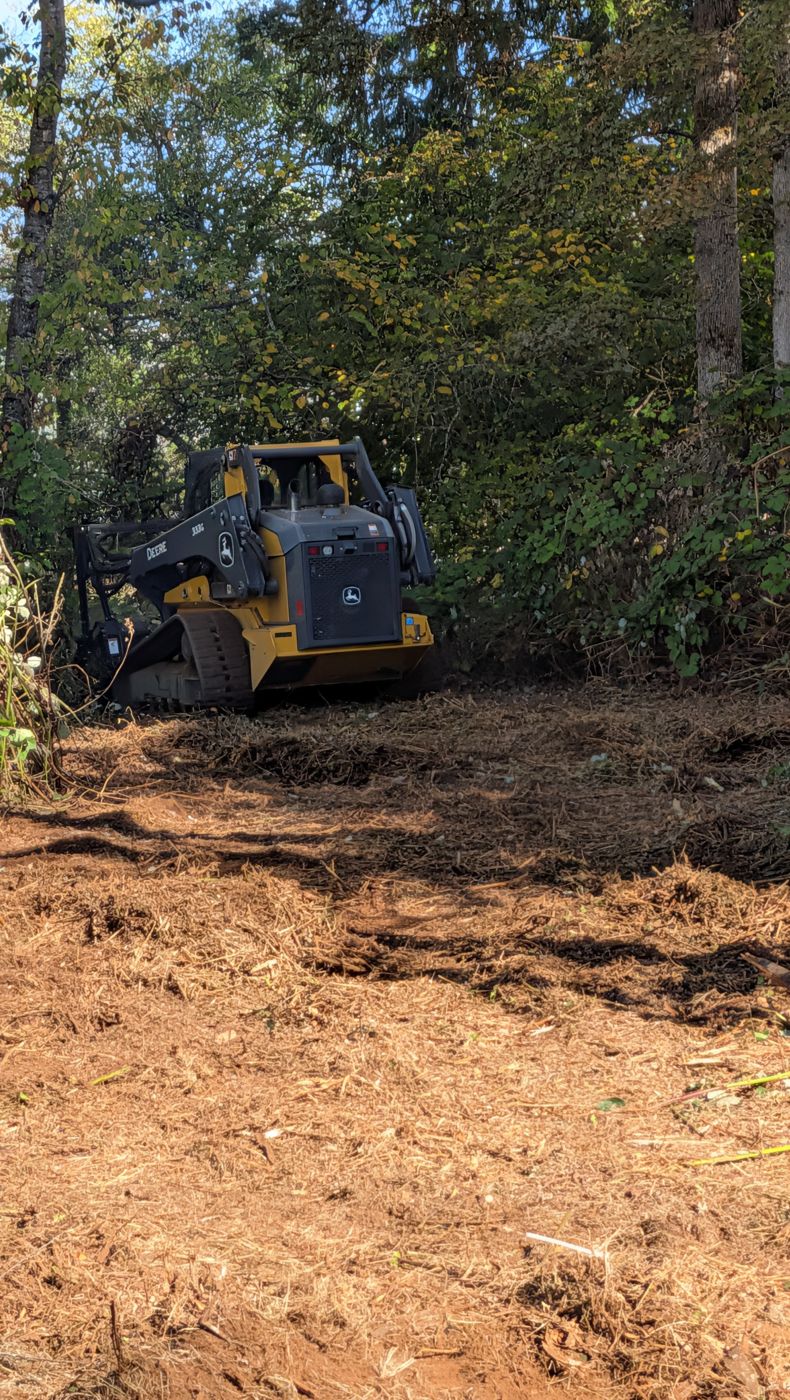
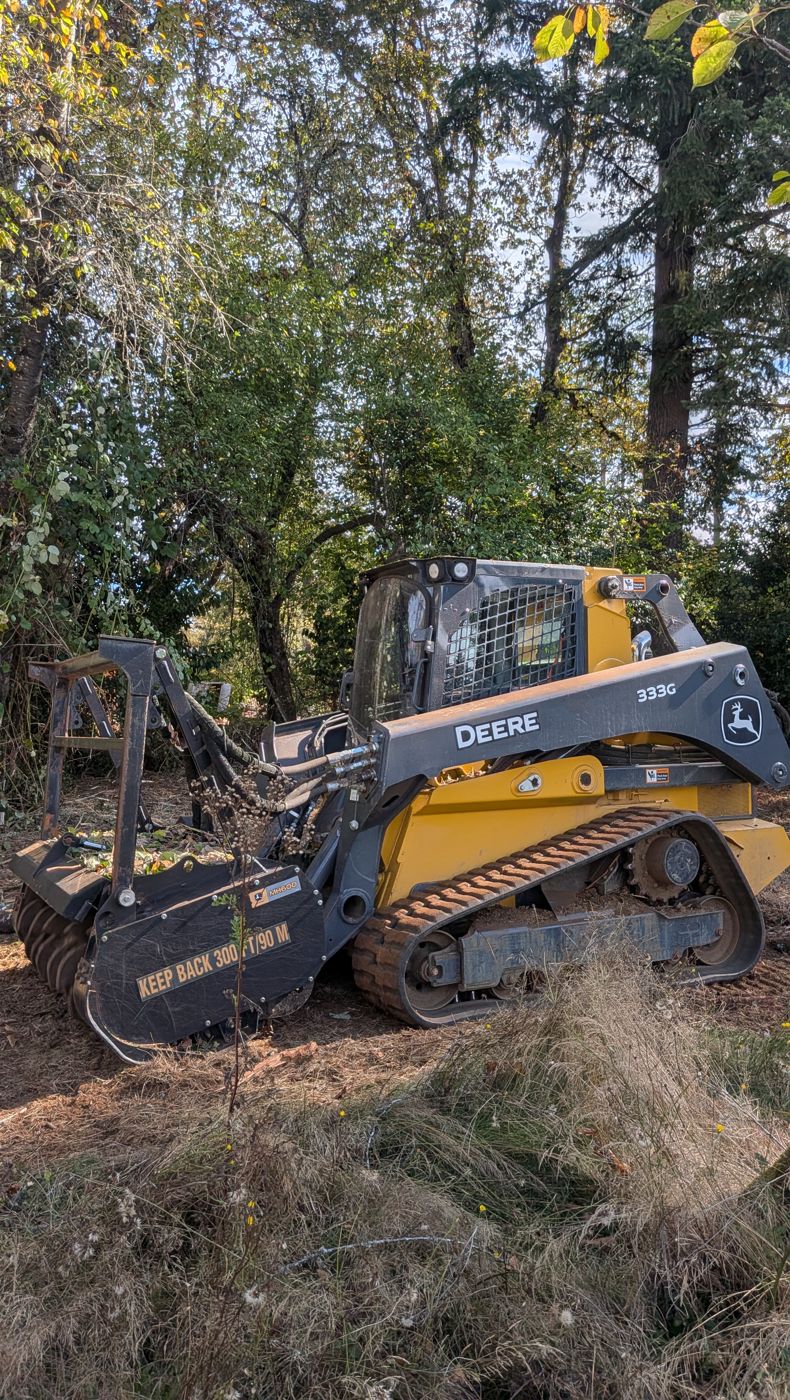
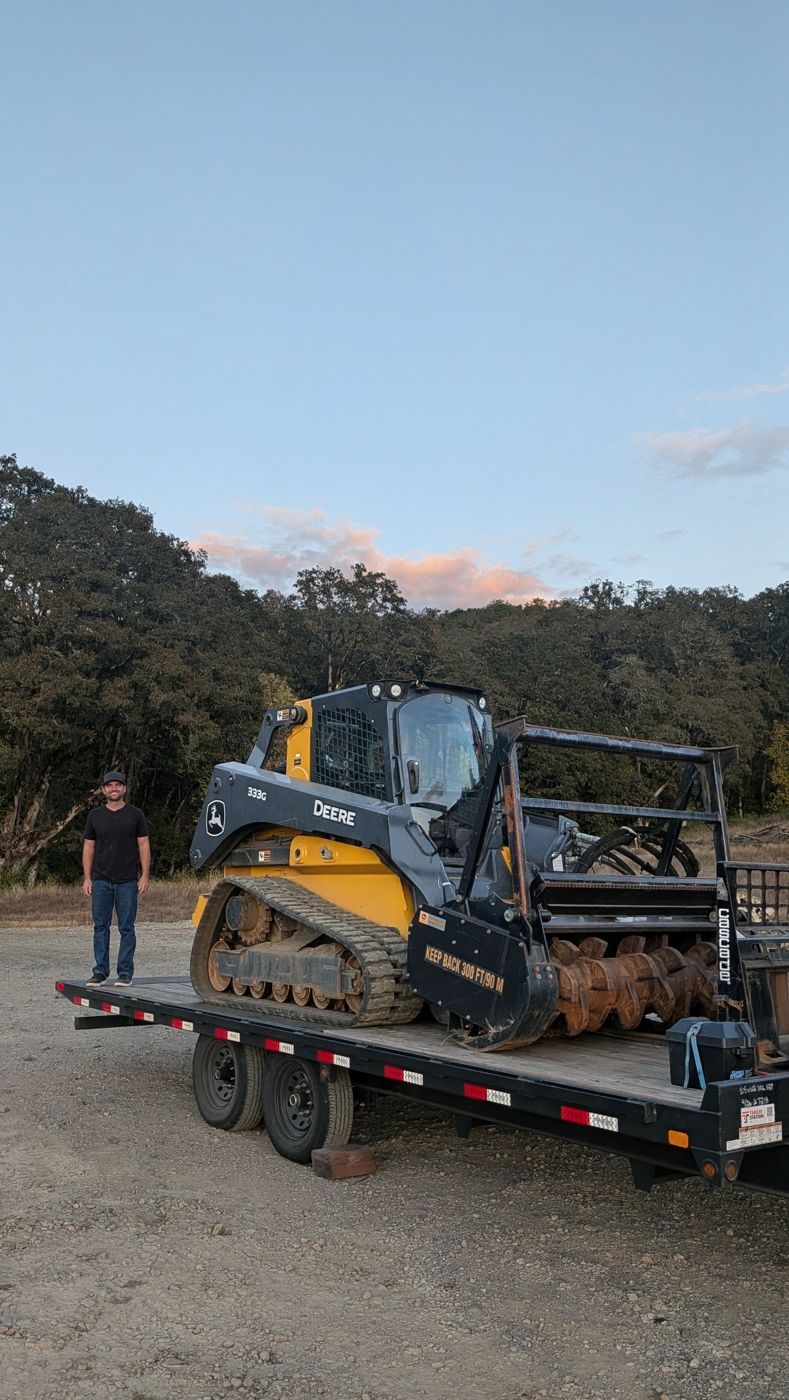
Our John Deere 333G with a mulching head. Cut brush goes through it and comes out as a layer of chips on the ground.
Locally owned and run.
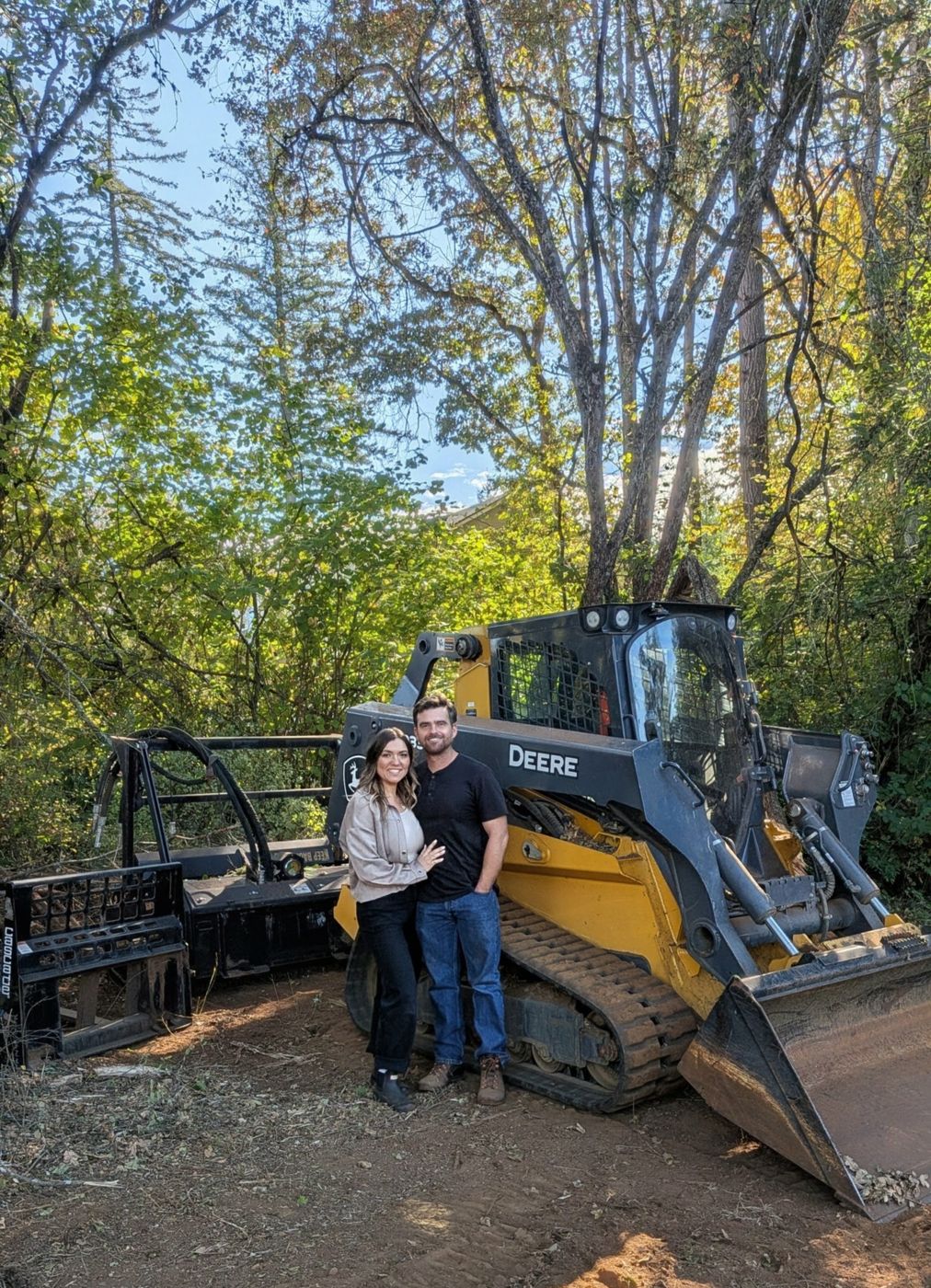
When you call, you reach the people who will be on the machine. We walk the property with you, give you a written price, and clear what we agreed to.
Got brush that needs to go?
Send a few phone photos or call. We will tell you what it takes and put a written price in your hands after a free walk-through.
What we clear.
Most of this county's overgrowth is the same handful of problems. Here's what the machine handles.
Blackberry & invasives
Himalayan blackberry, scotch broom, ivy and holly ground to chips, canes and root crowns knocked down to soil level so regrowth comes back thin instead of thick.
Defensible space & fire-risk clearingNew
Dry brush and blackberry crowding your house, shop or outbuildings, cleared back to create a buffer. See the section below.
Underbrush & saplings
Alder, maple and fir saplings, vine maple and dense undergrowth. Standing timber stays; the tangle underneath goes.
Pasture reclamation
Grazing ground and hay fields that went to brush while nobody was looking, brought back to something a tractor can work.
Pasture & field mowingAsk us
Once a pasture's been reclaimed, keep it that way. Mowing for fields and rural acreage that have gotten away from you — a good fit right after a clearing job, or on its own for ground that's already open but overgrown with grass and light brush.
Fence lines & trails
Property lines cleared for new fence, driveways widened, walking and equipment trails cut through wooded acreage.
Thinning around timber
Open up a fir stand without taking the trees. Removes the ladder fuel and gives the stand room and light.
Lot pre-clearing
Vegetation off a parcel ahead of a survey, fencing, perc testing or a sale, so the next trade — or the next buyer — can actually see the ground. Realtors and sellers: call us.
Defensible space & fire-risk brush clearing.
Most Clark County cities no longer allow land-clearing burn piles, and dry brush close to your home is a real wildfire risk, not just a chore. We clear blackberry, underbrush and overgrowth back from your house and outbuildings in a single mulching pass.
Ask us about clearing the roughly 30-foot zone around your home that fire agencies recommend. We'll walk it with you, tell you what needs to go and what can stay, and quote it in writing.
Why mulching beats cut-and-haul clearing.
Same overgrowth, two very different jobs. The difference shows up in your invoice and in what's left on your ground afterward.
Cut, pile and haul
- Crews cut, then stack, then haul. Three passes, three line items.
- Truck loads and dump fees on top of the clearing cost.
- Burn piles that sit for months and need a permit and a burn window.
- Bare, torn-up soil that erodes over the first wet winter.
One-pass mulching
- One machine, one pass. Growth becomes mulch where it stood.
- Nothing leaves the property, so there's nothing to haul or dump.
- No piles, no permits, no waiting on a dry burn day.
- Roots stay in place and the chip layer holds the soil through winter.
What mulching will not do: it grinds growth to ground level but leaves the root mass in the soil. If you need a building pad, a septic field or finished grade, you need an excavator after us. We'll tell you that during the walk-through rather than after the invoice.
How a job runs.
Send the property
Address or parcel number, rough acreage, and a few phone photos of the worst of it. Takes you five minutes.
Walk it and price it
We come out, check access, density and ground conditions, and put a written quote in your hands with a not-to-exceed number on it.
Machine day
We show up when we said, clear what we agreed to, and walk the finished ground with you before the trailer leaves.
Ready to see your ground again?
Tell us where the property is and what is overgrown. You will hear back from us directly.
Land clearing across Clark County.
We clear brush, blackberry and overgrown acreage across Clark County and the south end of Cowlitz County. Washington side only — we don't work in Oregon.
Outside this list? Call anyway. If it's close and the job is big enough to justify the trailer, we'll come look.
- Vancouver
- Battle Ground
- Ridgefield
- La Center
- Camas
- Washougal
- Woodland
- Yacolt
- Amboy
- Brush Prairie
- Hockinson
- Salmon Creek
- Felida
- Hazel Dell
- Orchards
- Kalama
Questions we get every week.
Do you do defensible-space or fire-risk clearing?
Yes. We clear brush, blackberry and overgrowth back from houses, shops and outbuildings so there's less dry fuel against the structure. Tell us when you call that it's for fire risk and we'll plan the job around the area nearest your buildings.
How is the price worked out?
Mostly by how thick the growth is. Our launch pricing runs about $2,600 to $3,400 per acre, with light growth at the low end and heavy blackberry at the high end. Slope and access can add to it. Light growth is scattered saplings and thin grass. Medium is real brush with some blackberry but still passable. Heavy is solid blackberry and underbrush with no ground showing. Send us photos and we'll give you a rough range. We always walk the property before the price is final, because photos can hide slope, debris and roots.
Can you work on steep ground?
Some of it. Our machine is a compact track loader, and it gets unstable crossing slopes sideways. Past roughly a 15 to 20 percent grade we work straight up and down the hill instead of across it, and the job costs more because it goes slower. Very steep ground may be too risky, and we'll tell you that during the walk-through rather than push it.
Do you take out the stumps?
No. A mulcher grinds standing growth down to ground level and can shave a stump flush, but the root mass stays in the soil. That's fine for pasture, trails, fence lines and general reclamation. It isn't enough for a building pad or finished grade — that's excavator work, and we'll say so up front.
How big a tree can you handle?
Comfortably up to about six to eight inches at the base. Anything larger gets dropped separately or left standing. If your property has real timber on it, say so when you call — bigger trees change the plan and sometimes trigger state forest practice rules.
Where does all the material go?
Nowhere. It stays on your ground as a chip layer a few inches deep. It suppresses regrowth for a couple of seasons, keeps soil from washing off over the winter, and breaks down into the dirt. No trucks, no dump fees.
Will the blackberry come back?
Some of it, yes — anyone who tells you otherwise is selling. Mulching knocks the canes and crowns down hard and the chip layer slows what regrows. Most properties want a follow-up pass in the second or third year, and a lot of customers put it on a cycle. We'll be straight with you about what your ground needs.
Can you work in the winter?
Sometimes. Saturated clay means ruts and torn ground, and we'd rather turn down a job than wreck your pasture. Firm or frozen ground, gravel access and drier stretches are all workable. Call and we'll look at your site and the forecast honestly.
How much can you clear in a day?
Depends entirely on what's growing. Light brush on flat, open ground moves fast. Heavy blackberry over downed wood on a slope is slow going. We'd rather give you a real number after walking it than a hopeful one over the phone.
Do you mow pastures, or just clear brush?
Both. Yes, for open ground. Once a field is cleared, the same machine can knock down tall grass and light brush. If you've got a pasture that's gotten away from you, ask about a mowing pass, either as a follow-up to a clearing job or on its own.
Do you work in Portland or anywhere in Oregon?
Not currently. We only work on the Washington side of the river, in Clark County and just north of it.
Is North Forest a registered Washington business?
Yes. North Forest Land Clearing is a trade name of North Forest Property Services LLC, a Washington limited liability company with a Washington business license (UBI 606 292 082). You can look the business up on the Washington Secretary of State's website.
Tell us about the property.
Quickest way is to call. If it's after hours, send the details and we'll get back to you the next working day.
- [email protected]
- Hours
- Monday to Saturday, 7am to 6pm
- Serving
- Clark County & south Cowlitz County, WA